Bagasse pellet mill

Bagasse Pellet Mill for Sale
Shopping for a bagasse pellet mill for sale? Bagasse is high-fiber, low-density, and abrasive—die, feeder, and torque particularly matter. Fuel mills use 42CrMo dies (~1:6–1:8); feed mills use stainless dies with steam conditioning. Single-unit pricing for bagasse-capable mills sits roughly between $10,000 and $87,500, depending on capacity and configuration.
Bagasse Pellet production

Capacity
0.3–45 T/H

Particle size
2-12mm
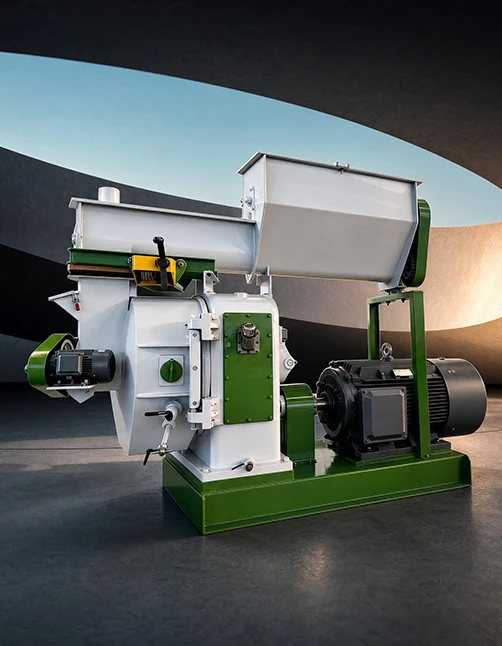
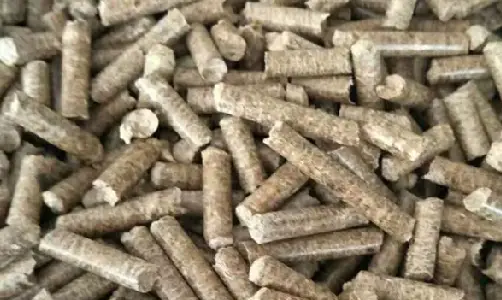
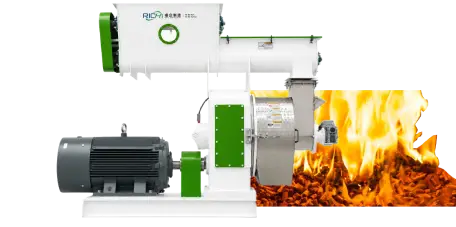
Bagasse pellet production hinges on one machine—the pellet mill. It is where loose fiber becomes density. The ring die rotates; the rollers press the bagasse through the die holes; the knives cut the extruding strands to length. The final output consists of dense, uniform pellets measuring 2–12 mm.
Why Turn Bagasse into Pellets?


01
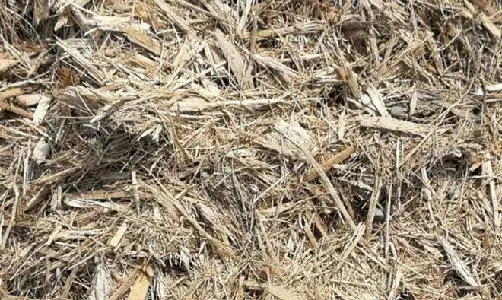
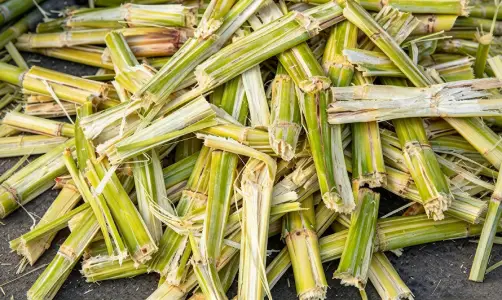
Raw bagasse is a storage and transport liability. Pellets are an asset.
Loose bagasse takes up volume, catches moisture, and degrades. Pellets flow, stack, and ship. You are converting a liability into a product with a defined density and a predictable burn.
02
The fuel value is already there. Pellets just make it usable.
Compared with raw bagasse burned in a grate boiler, bagasse pellets — dried, cleaned of impurities and compressed — deliver roughly 3,400–4,200 kcal/kg (about 14–17.6 MJ/kg) with lower ash content. The pellet form turns that heat into something a biomass boiler, a co-firing plant, or an export buyer can actually meter and burn efficiently.
03
The market is not imaginary.
Brazil’s refined bagasse pellet exports were projected to break 1.2 million tons in 2025, and Southeast Asian export volumes have been climbing at double-digit rates. Biomass pellet production costs in Southeast Asia sit in the $65–$90 per ton range when feedstock is sourced locally at competitive rates—leaving room against export prices.
04
Feed use is a second revenue door.
With the right conditioning and a feed-grade die, bagasse can be blended with corn, soybean meal, wheat, and other ingredients to produce ruminant or poultry feed pellets. One raw material, two end markets.
Bagasse vs. Bagasse Pellets: What Actually Changes
| Property | Raw Bagasse | Bagasse Pellets | What It Means in Practice |
| Moisture | ~48–50% (wet basis) | ~7.6–8% after drying and cooling | Pellets do not rot in storage; raw bagasse does |
| Bulk density | ~80–150 kg/m³ bulk density; fibrous and fluffy | Bulk density 600–726 kg/m³; true density of bagasse fiber remains unchanged | Pellets fill a truck or a silo predictably; loose bagasse does not |
| Ash content | ~2–2.31% (with field soil contamination) | ~0.49–1.5% (lower ash after impurity removal during pellet processing) | Cleaner burn, less slag, easier boiler operation |
| Form and handling | Fibrous, fluffy, prone to bridging | Uniform 6–12 mm cylinders | Metering, conveying, and combustion become controllable |
| Combustion behavior | High moisture → poor ignition, high particulate carryover | Low moisture + high density → stable flame, better burnout | Less unburned carbon, less smoke, more usable heat per ton |
Types of
Bagasse Pellet Mills
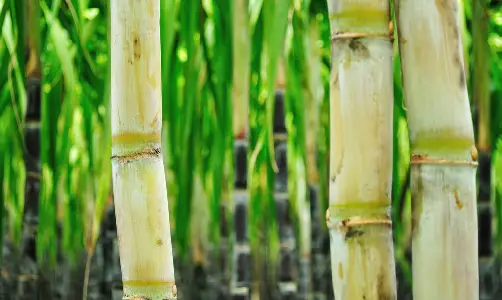
In industrial processing, bulk bagasse follows two main paths. It is either blended with grains and protein meals for animal feed, or dried and compressed into biomass fuel pellets. While it can also go into organic fertilizer or bedding—as a minor auxiliary material—we’ll set those niche uses aside for now.
Bagasse
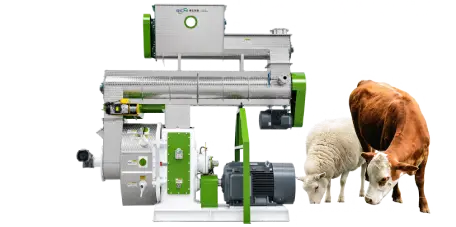
Animal Feed Pellet Mill
· To ensure the durability and palatability of the feed pellets, this configuration employs a high compression ratio, ranging from 1:8 to 1:13.
· Equipped with a conditioner that introduces steam to gelatinize starches and soften fibers.
· This configuration is recommended if your target products include cattle feed, poultry feed, or aquafeed containing ingredients such as sugarcane bagasse.
Model : SZLH
Capacity : 1.0–45 T/H
Bagasse
Fuel Pellet Mill
· This model features a low-to-medium compression ratio (approximately 1:6 to 1:8) and is specifically optimized for high-fiber biomass materials.
· Equipped with an anti-bridging feeder and a forced-feeding mechanism.
· It utilizes a low-speed, high-torque motor (6 to 8 poles).
· This is the workhorse for sugar mills and biomass plants.
Model : MZLH
Capacity : 0.2–4.0 T/H
Bagasse Pellet Mill Specifications
The tables below give you the working ranges. Treat them as a starting point, not a final quote—the die, feeder, and motor configuration get matched to your specific bagasse moisture, fiber length, and target pellet spec before anything is built.
Bagasse Pellet Mill for animal feed
Note: The specific output depends on the proportion of sugarcane bagasse added and the specifications of the molds.
| Model | MZLH320 | SZLH250 | SZLH250 | SZLH250 | SZLH250 | SZLH558 | SZLH678 | SZLH768 |
|---|---|---|---|---|---|---|---|---|
| Forced Feeder Power(kw) | 22 | 37 | 55 | 110 | 160 | 185 | 250 | 315 |
| Feeder Power (kw) | 1.1 | 1.5 | 1.5 | 1.5 | 1.5 | 1.5 | 1.5 | 2.2 |
| Modulator Power(kw) | 1.5 | 4 | 4 | 7.5 | 7.5 | 11 | 11 | 11 |
| Die Inner Diameter(mm) | 250 | 320 | 350 | 420 | 508 | 558 | 673 | 762 |
| Finished Pellet Diameter (mm) | 2~12 | 2~12 | 2~12 | 2~12 | 2~12 | 2~12 | 2~12 | 2~12 |
| Output (T/H) | 1~1.5 | 3~4 | 5~6 | 10~12 | 15~16 | 20~22 | 30~33 | 38~40 |
Bagasse Fuel Pellet Mill
Note: Actual output shifts with fiber length, ash content, and die compression ratio.
| Model | MZLH320 | MZLH350 | MZLH420 | MZLH520 | MZLH678 | MZLH768 |
|---|---|---|---|---|---|---|
| Main Motor Power(kw) | 22 | 37 | 90 | 132 | 200 | 250 |
| Arch-breaking Feeder Power(kw) | 2.2 | 2.2 | 3 | 3 | 3 | 4 |
| Forced Feeder Power(kw) | 0.75 | 0.75 | 1.5 | 1.5 | 1.5 | 1.5 |
| Ring Die Inner Diameter(mm) | 320 | 350 | 420 | 520 | 673 | 762 |
| Finished Particle Diameter(mm) | 2~12 | 2~12 | 2~12 | 2~12 | 2~12 | 2~12 |
| Output(T/H) | 0.2-0.3 | 0.3-0.5 | 1.0-1.2 | 1.5-2.0 | 2.5-3.0 | 3.0-4.0 |
You can achieve your target output by selecting the appropriate bagasse pellet mill model or using pelletizers in parallel; we offer a wide range of configurations—including basic, low-spec, standard, high-spec, fully automatic, semi-automatic, and PLC-controlled systems—to meet your needs.

Delivered Bagasse Pellet Mill Case Notes
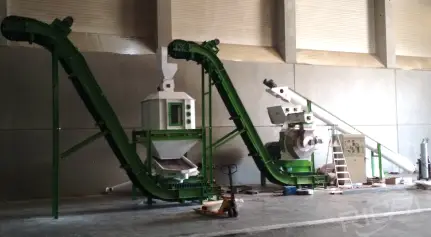
Bagasse Pellet Mill In Thailand
Compact semi-auto unit for a farm cooperative, producing export-grade biomass fuel pellets.
Project time: Jan 2023
Pellet size: 6 mm
Capacity: 1–2 T/H
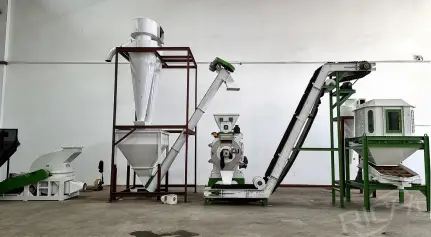
Bagasse Pellet Machine In Vietnam
Automated small plant, bagasse feedstock, finished pellets shipped to EU biofuel buyers.
Project time: Mar 2023
Pellet size: 8 mm
Capacity: 2 T/H
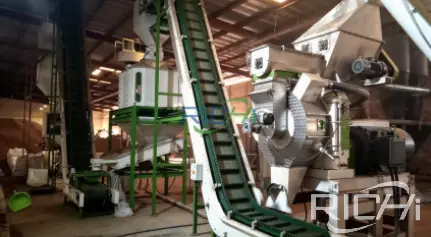
Bagasse Pellet Mill In Colombia
Automatic line for a cattle ranch, bagasse processed into high-quality ruminant feed pellets.
Project time: Nov 2022
Pellet size: 6 mm
Capacity: 3–4 T/H
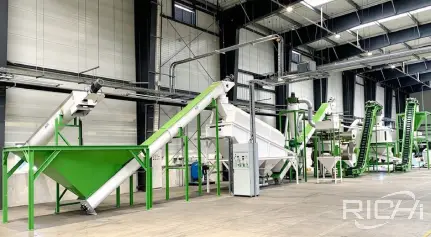
Bagasse Pellet Machine In India
Semi-auto plant, converts sugarcane bagasse to fuel pellets for local industrial boiler replacement.
Project time: Sep 2021
Pellet size: 4–6 mm
Capacity: 5 T/H
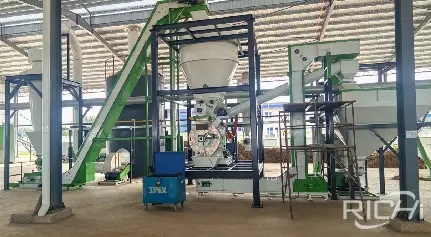
Bagasse Pellet Mill In Brazil
Full-automatic line, sugar mill client, turns bagasse into cattle feed pellets under local bioenergy incentives.
Project time: Aug 2022
Pellet size: 5 mm
Capacity: 6 T/H
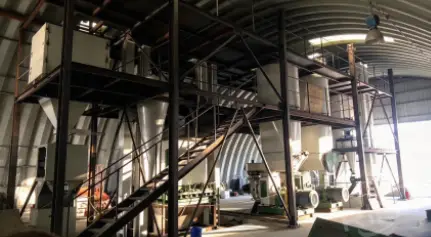
Bagasse Pellet Machine In Indonesia
Large fully automatic sugar mill project, high output fuel pellets for on-site power generation.
Project time: Jun 2021
Pellet size: 8 mm
Capacity: 10 T/H
Main Components
What’s inside the bagasse pellet mill?
Let’s walk through the key parts that make this pelletizer tick—
each one matters in daily operation.

Feeding System
Anti-bridging and forced feeders keep fluffy bagasse moving, preventing arches that starve the die.

Conditioner
Steam injection softens tough bagasse fibers and gelatinizes starch, boosting feed digestibility and die lifespan.

Ring Die
Carburized 42CrMo dies provide the exact compression ratio needed to punch through high-fiber bagasse.
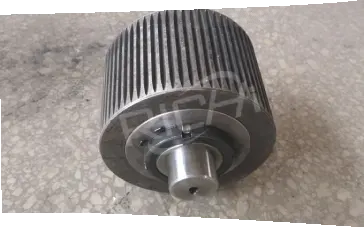
Roller Assembly
Two hardened rollers press material through die holes; wear‑resistant shells extend service life.
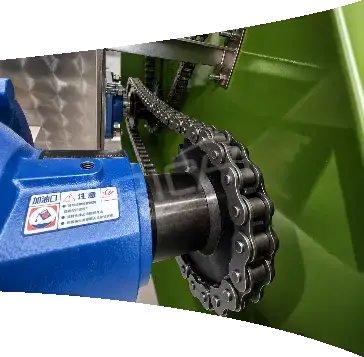
Gear Transmission
Direct-coupled hard-tooth gears eliminate belt slip, delivering 15% more stable torque under heavy bagasse loads.
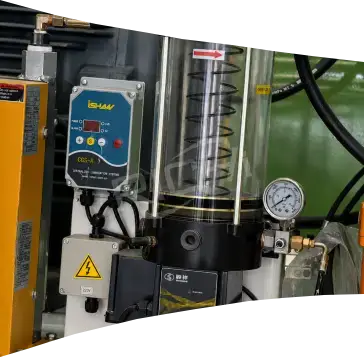
Lubrication System
Sealed housings and visible oil windows keep abrasive bagasse dust away from critical bearings and gears.

Bearings
Imported SKF bearings with separated housings ensure abrasive fiber hits the seal, not the bearing.
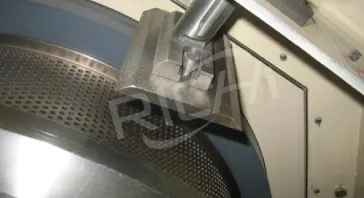
Cutter
Reversible, fine-adjustable cutters ensure uniform pellet lengths and drastically reduce crushing fines.
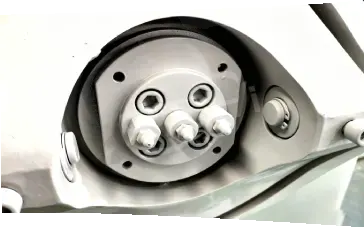
Safety Pin
Shear pin breaks under excessive load, protecting the gearbox and main shaft from sudden shock damage.
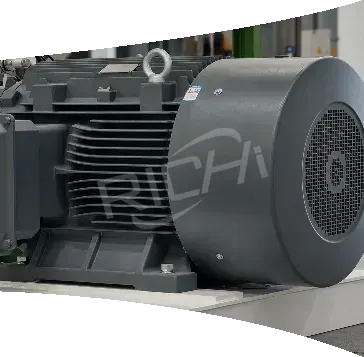
Motor
Low-speed, high-torque motors (6-8 poles) deliver the sustained crushing force bagasse demands, not just RPM.
Auxiliary Equipment Around the Bagasse Mill
The mill is one machine. A production line is a system. Here is what sits around the bagasse pellet machine and why each piece matters for bagasse specifically.
Hammer Mill
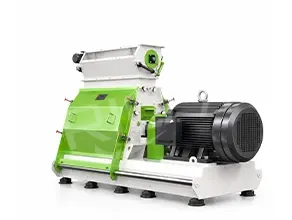
Reduces fibrous bagasse chunks to 3–5 mm. Water-drop chamber design helps break the circulation layer and improves throughput on light, fibrous material.
| Power | Capacity | Speed |
| 37–220 kW | 0.8–8 t/h | 2,980 rpm |
Mixer
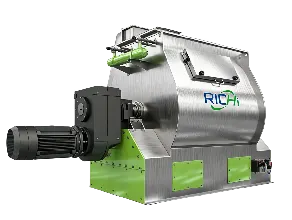
Blends bagasse fiber with corn, soybean meal, wheat bran, and premix to a consistent formula.
| Power | Mixing amount per batch | Effective volume |
| 11–55 kW | 500–3000 kg/P | 1-6 m³ |
Bagasse Dryer
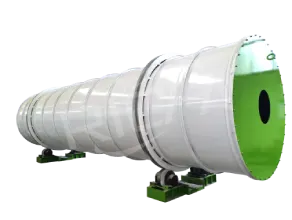
A rotary drum dryer brings high-moisture fresh bagasse into the pelleting window.
| Diameter | Length | Drum rotation speed |
| 0.6–1.8 m | 6–24 m | 3–12 rpm |
Bucket Elevator
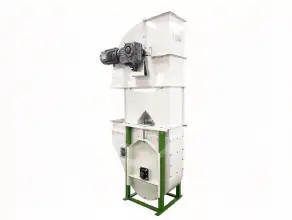
Vertical transport between process stages.
| Power | Capacity | Head pulley diameter |
| ≤4–37 kW | 6–100 t/h | 360–630 mm |
Bagasse Pellet Cooler
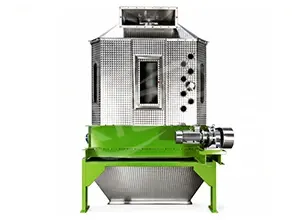
A counterflow cooler brings them to room temperature +3–5°C. Cooled pellets handle better, bag better, and do not sweat in storage.
| Power | Capacity | Cooling time |
| 1.5–2.2 kW | 1–40 t/h | 6–15 min |
Rotary Grading Sieve
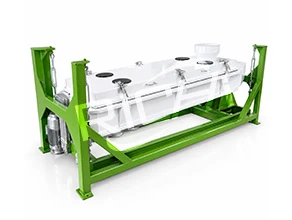
Separates whole pellets from fines and oversize. Oversize goes back to the mill; fines go back to the die.
| Power | Capacity | Gyration radius |
| 1.5–5.5 kW | 3–40 t/h | 25–35 mm |
Screw Conveyor
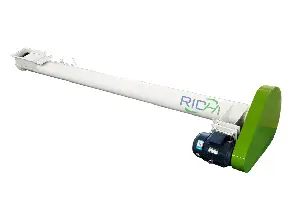
Horizontal or slight-incline transport. Advantages: easy inspection, low risk of bridging, and simple cleaning when fibers accumulate.
| Capacity | Screw diameter |
| 8-80 m³/h | 160-400 mm |
Automatic Packing Machine
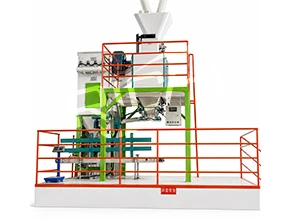
Weighs and bags the finished pellet.
| Power | Packing speed | Air supply requirement |
| 0.55 + 0.37 to 1.5 + 0.55 + 0.37 kW | 2–8 bags/min | 0.4–0.6 MPa, 1.5 m³/h |
How to Build a Complete Bagasse Pellet System
A bagasse pellet operation is not “buy a mill and start producing.” The line around the bagasse pellet mill determines whether the mill runs at its rated capacity or spends half its day recovering from upstream inconsistencies.
Building a Bagasse Feed Pellet Production Line
3-4T/h Bagasse feed pellet making line
8-12T/H Bagasse Feed Pellet Making Line
13-18T/H Bagasse Feed Pellet Making Line
16-24T/H Bagasse Feed Pellet Making Line
20-30T/H Bagasse Feed Pellet Making Line
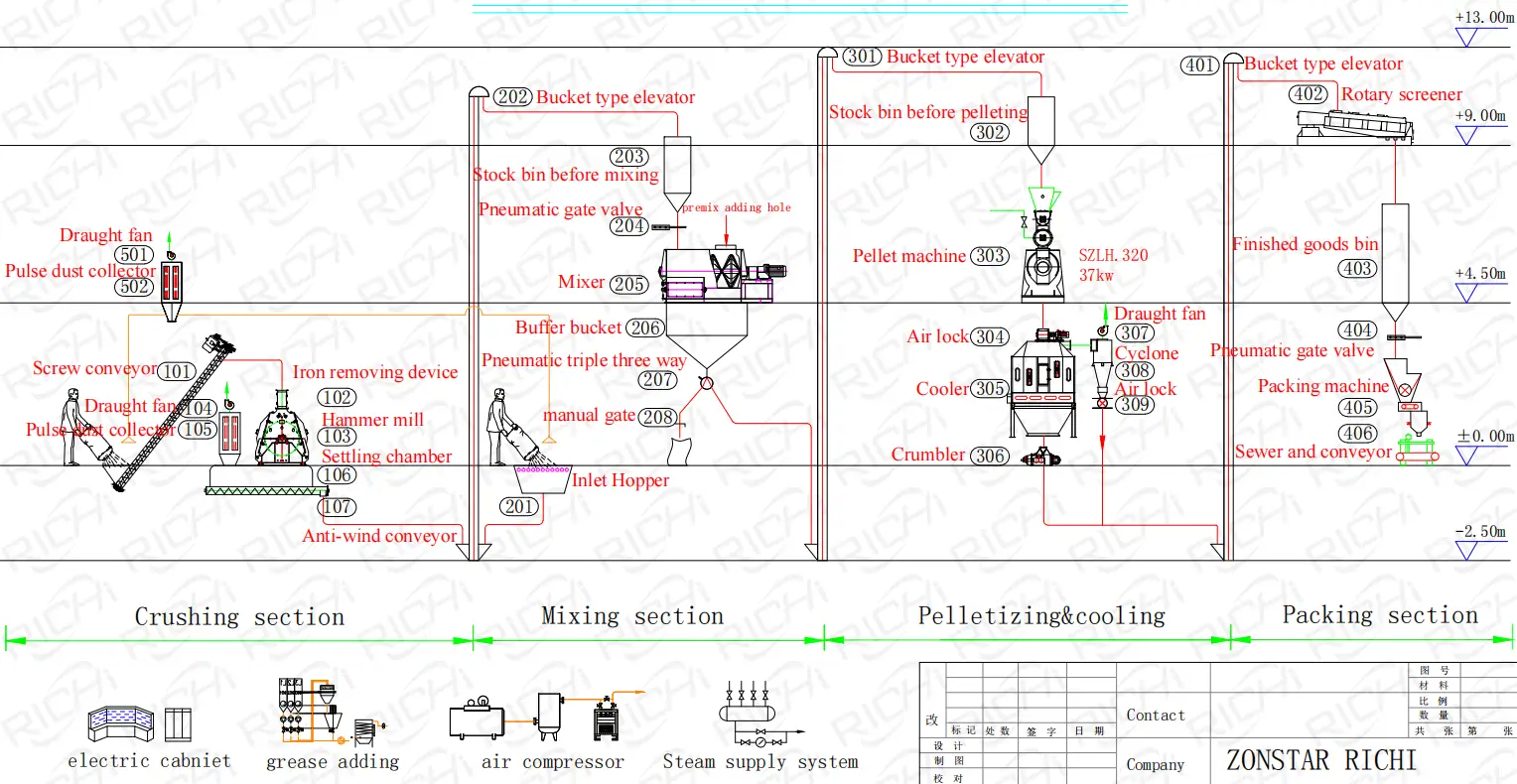
3-4T/h Bagasse feed pellet making line
Your entry-level choice. This 3–4 t/h compact line is followed by hammer mill and mixer.
Powered by a 37kW SZLH 320 bagasse pellet mill, it is highly cost-effective.
Perfect for local farms or small sugar mills looking to test the feed market with minimal investment.
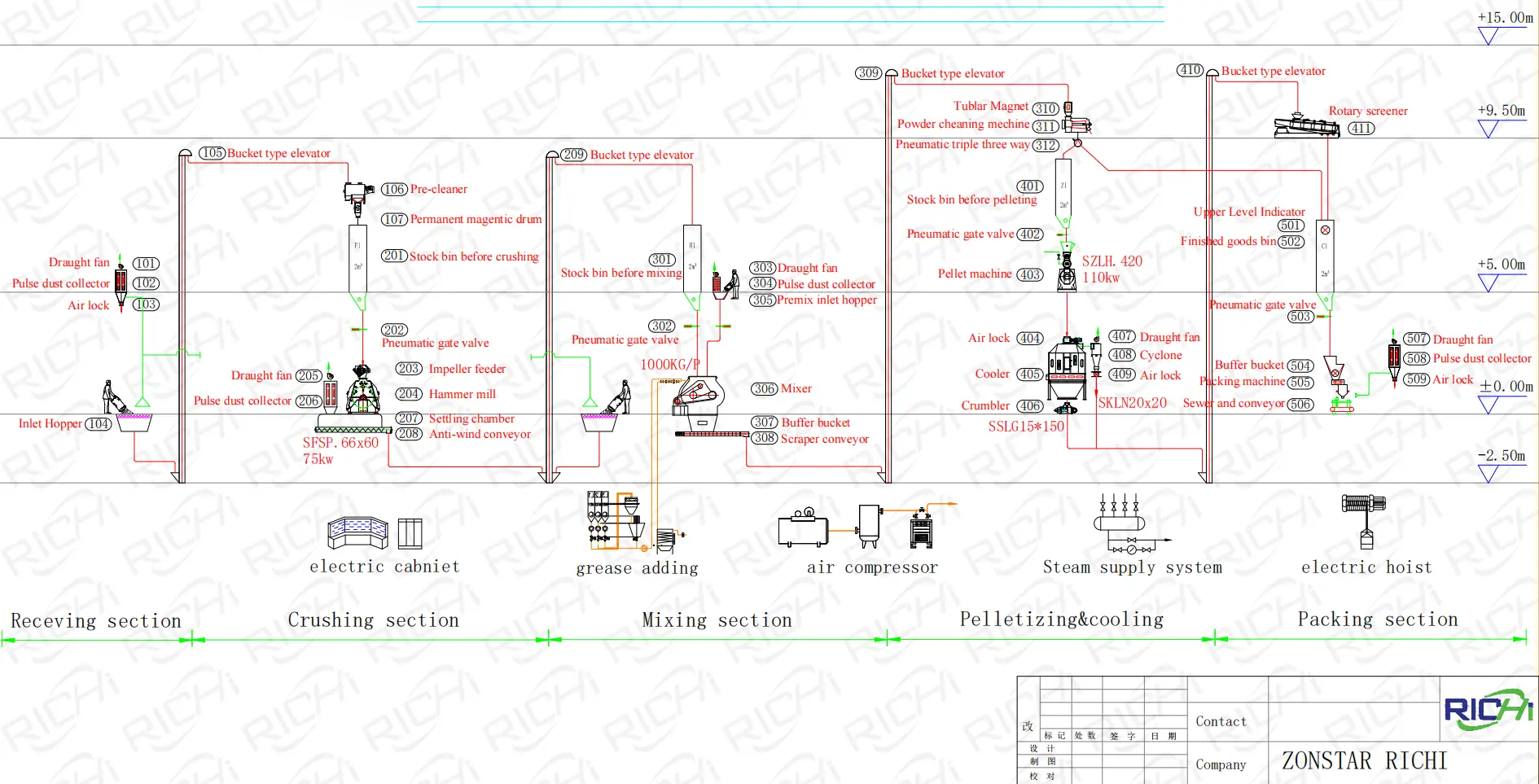
8-12T/H Bagasse Feed Pellet Making Line
Stepping up to commercial scale.
This 8–12 t/h blueprint adds essential pre-cleaning and magnetic separation to protect your equipment from tramp metal in raw bagasse.
It features the reliable 110kW SZLH 420 bagasse pellet mill and a larger capacity mixing system, ensuring steady, continuous output for growing feed plants.
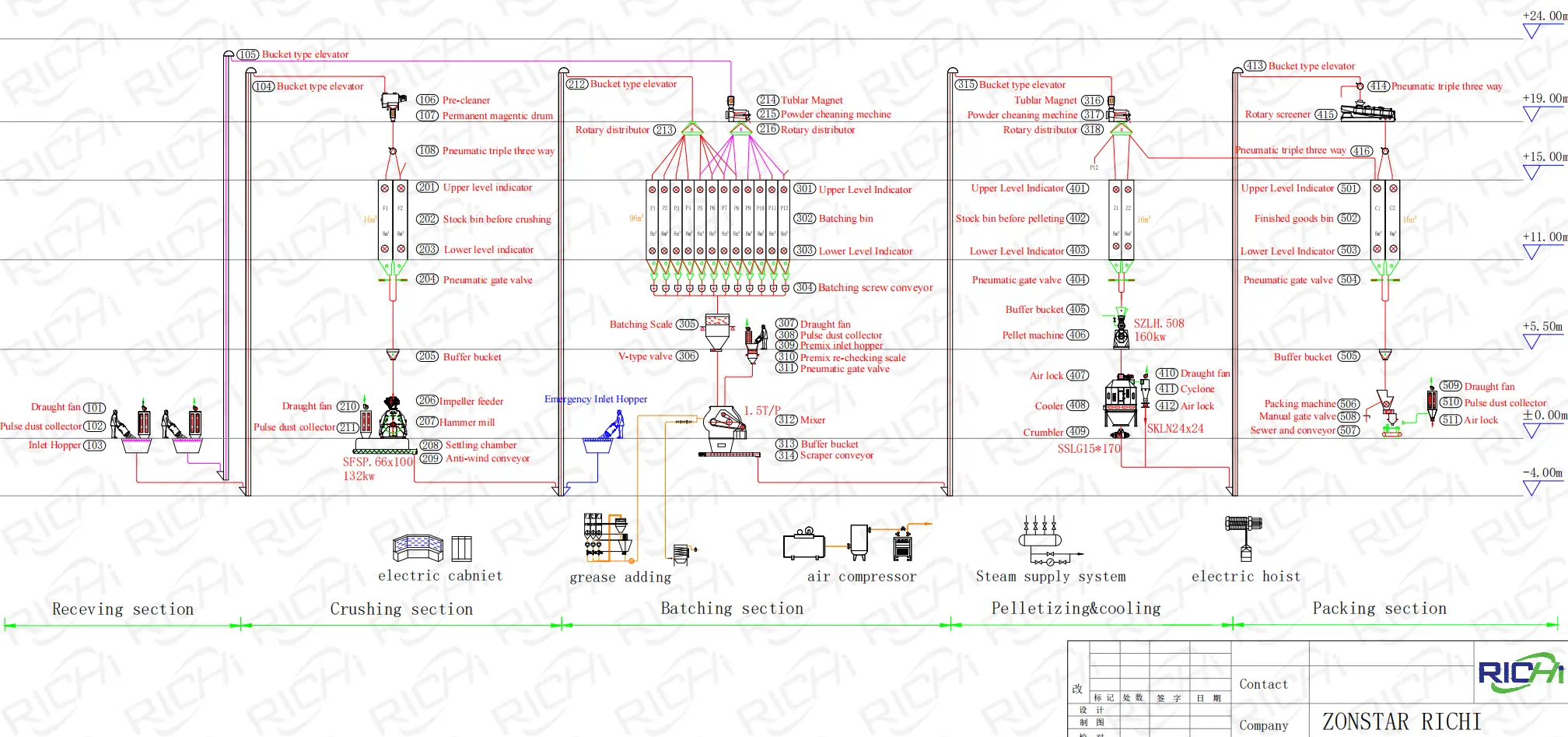
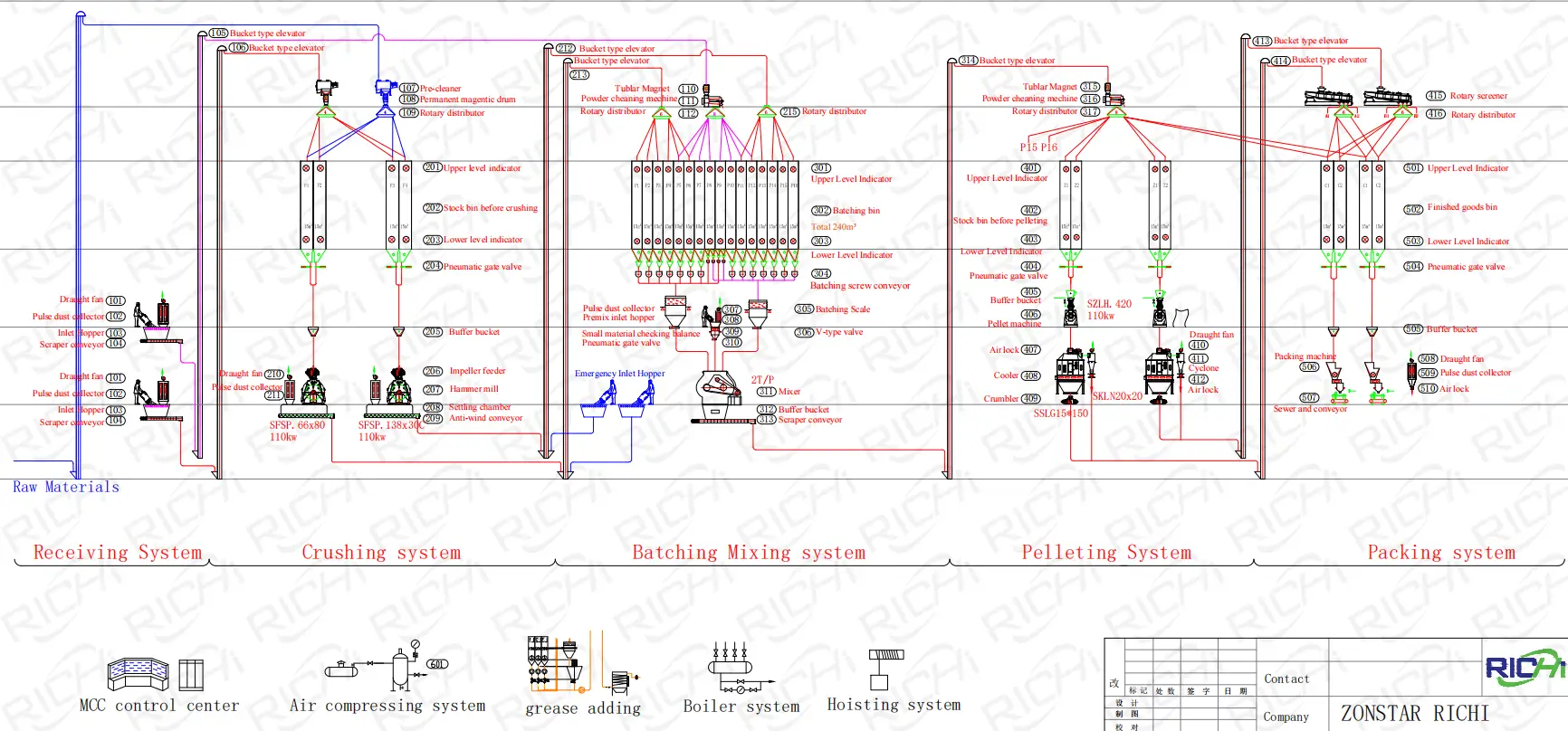
13-18T/H Bagasse Feed Pellet Making Line
Designed for precise, multi-formula production. Notice the multiple batching bins?
This 13–18 t/h layout uses the “Crush First, Batch Later” principle.
Upgraded to a 132kW hammer mill and a powerful 160kW SZLH 508 bagasse pellet mill, it guarantees flawless nutritional consistency and higher throughput for premium feed products.
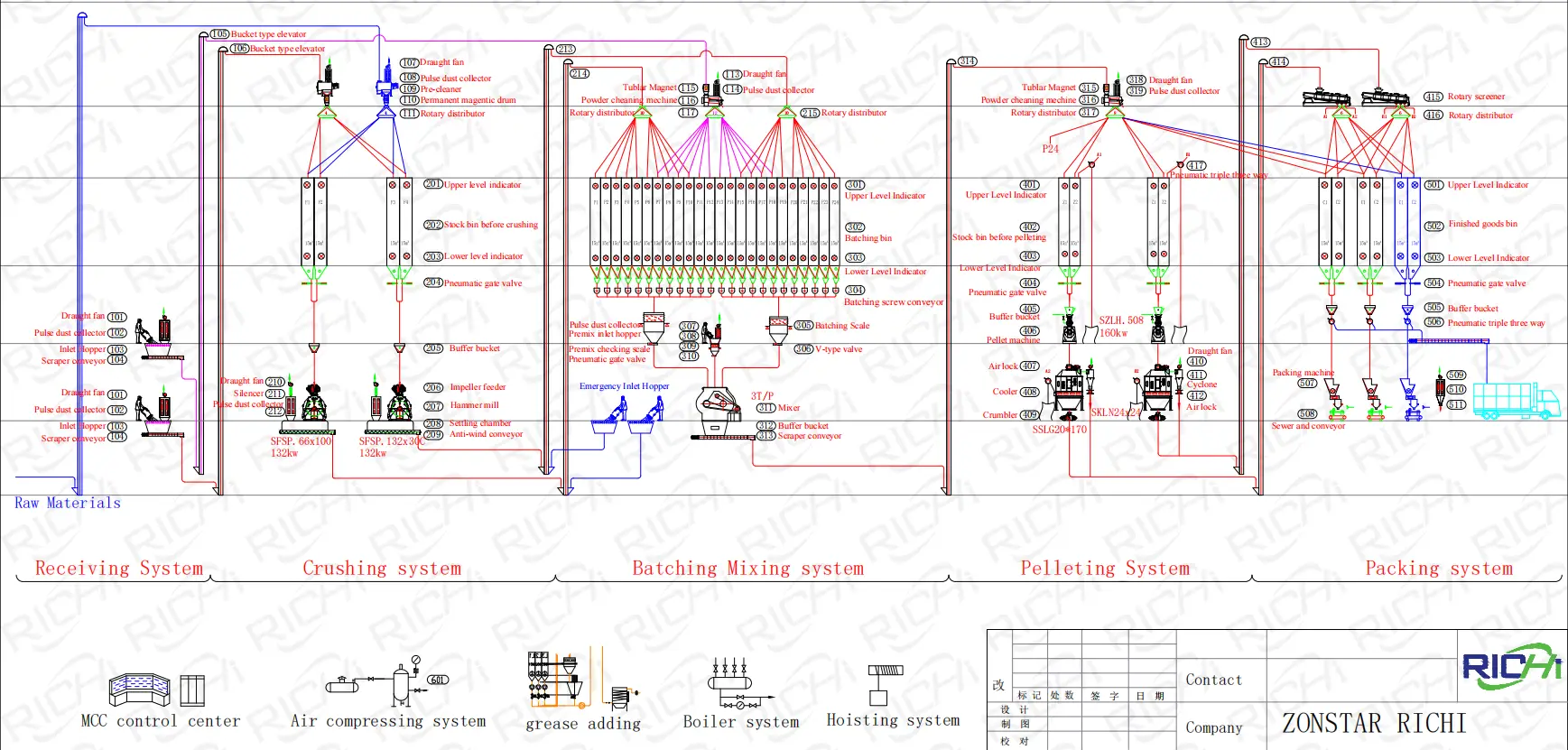
16-24T/H Bagasse Feed Pellet Making Line
High-volume, fully automated processing.
This 16–24 t/h blueprint features dual 110kW hammer mills and dual SZLH 420 bagasse pellet mills running in parallel.
It ensures massive capacity without single-point failure—if one line stops for maintenance, the other keeps running. Built for large-scale industrial continuous production.
20-30T/H Bagasse Feed Pellet Making Line
The flagship solution for maximum profitability.
Scaling up to 20–30 t/h, this layout uses twin 132kW hammer mills, a massive 3-ton batch mixer, and dual 160kW SZLH 508 bagasse pellet mills. It even includes a bulk truck loading system.
Engineered for the largest sugar mills and commercial feed factories.
Building a Bagasse Biomass Fuel Pellet Production Line
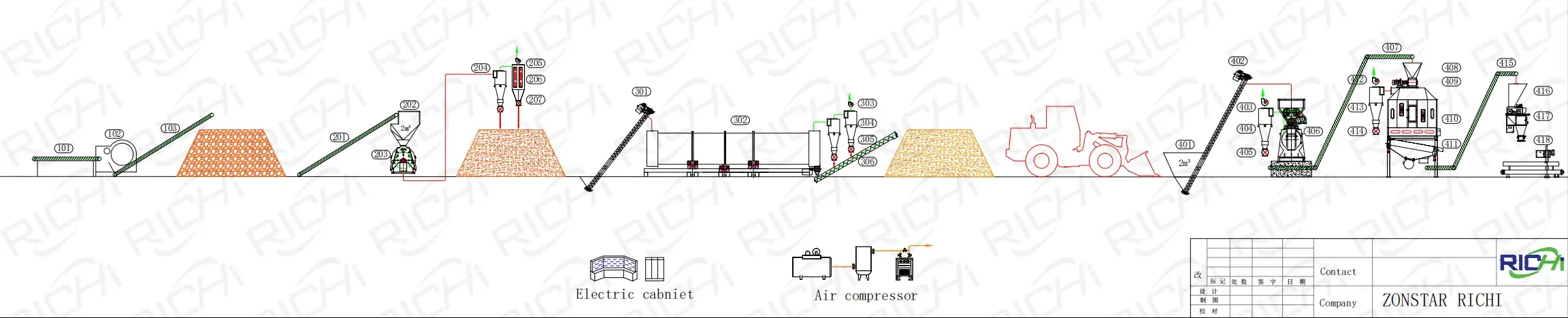
1-2.5 T/H Low-Config Bagasse Fuel Pellet Line
Your entry-level setup.
This 1–2.5 t/h line strips it down to the essentials: crushing, pelletizing, cooling, and packing. With minimal conveying and a compact footprint, it is cost-effective. Perfect for testing the market or small-scale fuel production.
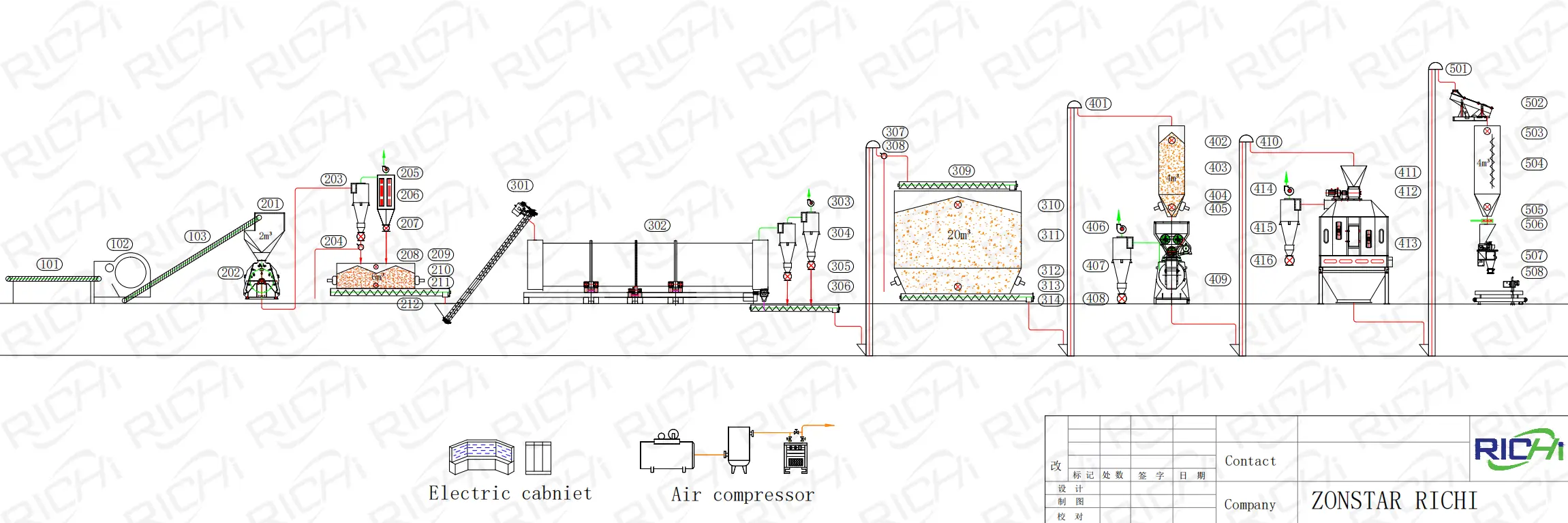
1-2.5 T/H High-Config Bagasse Fuel Pellet Line
Same capacity, but built for stability.
Notice the added buffer bins, cyclones, and pulse dust collectors. Because bagasse is highly dusty, this high-config line keeps your workshop clean and prevents material bridging. Smoother material flow means fewer blockages and a much steadier pelletizing process for tough cane fibers.
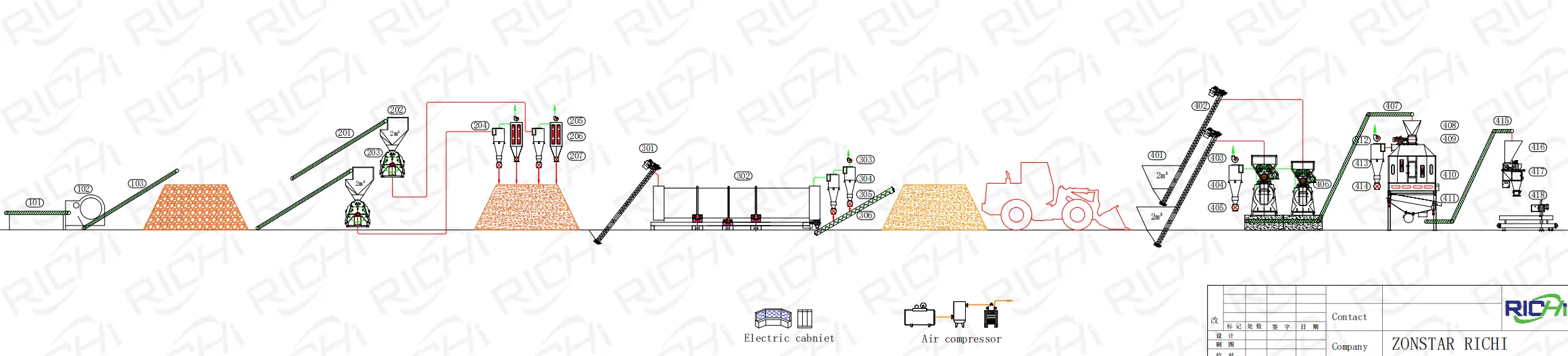
3-5 T/H Low-Config Bagasse Fuel Pellet Line
Scaling up for mid-sized sugar mills.
This 3–5 t/h layout handles larger volumes with two hammer mills and bagasse pellet mills. It focuses on the core conversion process without the heavy automation price tag. A solid, no-nonsense workhorse for continuous daily production—ideal if you have basic on-site dust control.
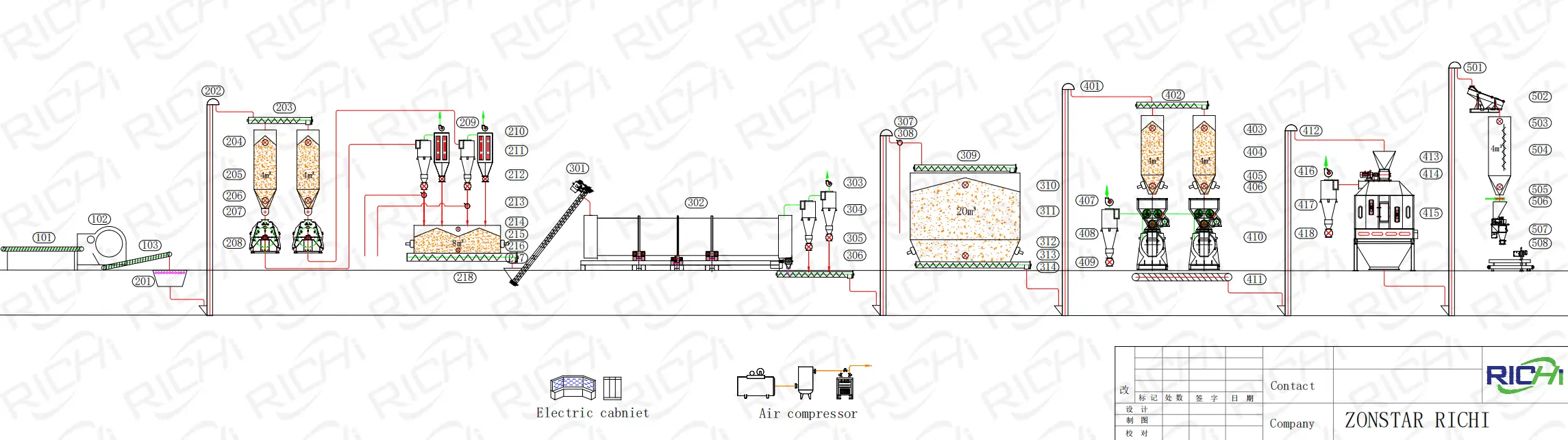
3-5 T/H High-Config Bagasse Fuel Pellet Line
The commercial standard for bagasse processing.
Look closely at the dual crushing setup and comprehensive dust network. It features larger stock bins to decouple the drying and pelletizing stages, ensuring the bagasse pellet mill runs at full load. This prevents the frequent starts and stops that wear out bagasse dies.
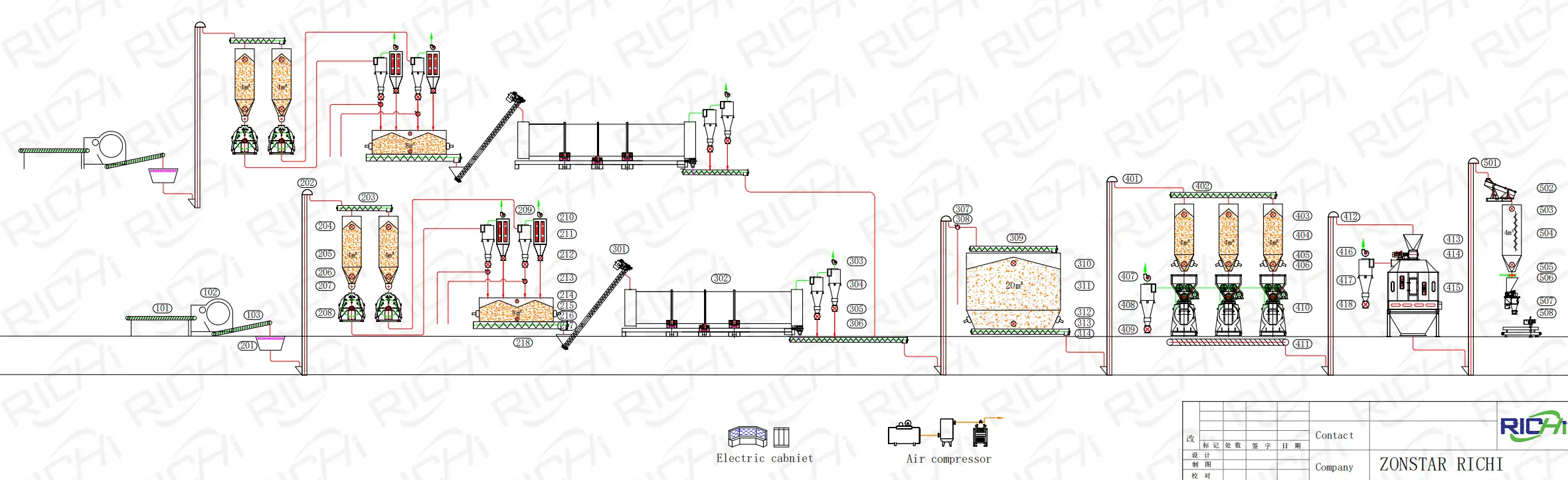
6-10 T/H High-Config Bagasse Fuel Pellet Line
Heavy-duty flagship architecture.
This 6–10 t/h blueprint uses multiple parallel machines—dual hammer mills and multi-pellet mills—to achieve massive output. It includes full pulse dust collection, massive buffer silos, and highly automated conveying. Engineered for large-scale sugar mills turning massive bagasse piles into export-grade fuel.
1-2.5 T/H Low-Config Bagasse Fuel Pellet Line
1-2.5 T/H High-Config Bagasse Fuel Pellet Line
3-5 T/H Low-Config Bagasse Fuel Pellet Line
3-5 T/H High-Config Bagasse Fuel Pellet Line
6-10 T/H High-Config Bagasse Fuel Pellet Line
FAQ About Bagasse Pellet Production
We often get practical questions from customers looking for a bagasse pellet mill: Can it produce both feed pellets and fuel pellets? What is the capacity of one unit? How does a bagasse fuel mill differ from a standard wood pellet mill? Our engineers answer these questions below, drawing on real project experience. Share your raw material details with us after reviewing, and we will prepare a customized quote for you.
How much does a bagasse pellet mill cost?
→
A single bagasse-capable ring die mill starts around $15,000–$20,000 for a small MZLH/SZLH unit and climbs to $80,000–$87,500 for a large high-capacity model.
A complete 1 t/h fuel line—mill, dryer, hammer mill, cooler, screen, and packing—is a different number: budget roughly $110,000–$115,000 for the equipment scope, before civil works and installation. The mill price and the line price are not the same thing. Ask for a line quote, not a mill quote, if you are starting from scratch.
What moisture does bagasse need to be for pelletizing?
→
Fresh bagasse is 48–50% moisture. For fuel pellets, dry it to 10–12% before the mill.
For feed formulas containing bagasse, the target moisture depends on the conditioner and the other ingredients—typically 12–16% entering the conditioner, with steam adjusting the final pelletizing moisture.
If the mill is slipping, smoking, or making soft pellets, moisture is the first thing to check. It is almost always moisture.
Why does my bagasse mill keep clogging?
→
Three usual suspects, in order: moisture too high, fiber too coarse, or die compression ratio mismatched to the material.
Bagasse fiber is long and springy; if it is not reduced to 3–5 mm before the die, it bridges in the chamber and the rollers cannot grab it. A die with too tight a compression ratio for the actual fiber length will also choke.
The fix is not “push harder”—it is fixing the upstream particle size and matching the die to the material.
How often do I need to replace the ring die and rollers?
→
On bagasse, die life depends on ash content, foreign matter, and how well the upstream drying and hammer milling are controlled. A 42CrMo carburized die is the wear-resistant choice; stainless is for feed hygiene.
Roller shells wear faster than the die in most bagasse operations because the abrasive fiber works the roller surface. Keep a spare die and a spare roller set. Waiting for a die to “fail completely” means you are running on borrowed time and making off-spec pellets for weeks before the failure.
Can one machine make both fuel pellets and feed pellets?
→
Not practically.
The fuel mill uses a 42CrMo die at a biomass compression ratio, forced feeding, and a low-speed high-torque motor. The feed mill uses a stainless die at a tighter ratio, a steam conditioner, and a 4-pole motor. The feeding logic and the die geometry are different.
Some suppliers will tell you one mill “does both.” It technically can be reconfigured—but the changeover is not a five-minute job, and the compromise configuration does neither job as well as a dedicated mill. If you need both products, plan for two mills or a clearly defined changeover protocol.
Do I need a dryer if my bagasse is already “dry enough”?
→
Test it. “Dry enough to touch” is not dry enough to pelletize.
Bagasse at 15–18% moisture will run through a mill, but the pellets will be soft, the die will slip, and the fines will climb. The practical fuel-pellet target is 10–12%.
If your incoming bagasse is already in that range, you can bypass the dryer with a three-way diverter—but do not assume it is. A moisture meter is cheaper than a week of bad pellets.
What is the difference between a bagasse fuel mill and a general wood pellet mill?
→
Wood pellets run on sawdust that is already fine and relatively uniform. Bagasse is longer-fiber, lower-bulk-density, and more prone to bridging.
A wood mill’s feeding system assumes material flows; a bagasse mill assumes material fights. That is why the bagasse fuel mill carries an anti-bridging feeder plus a forced feeder and a die profile designed for high-fiber compression.
You can run bagasse through a wood mill—for a while. The feeding system and the die will tell you when they have had enough.
What capacity should I choose?
→
Start from your bagasse availability, not from a catalog number.
A sugar mill crushing 10 t/h of cane generates roughly 3 t/h of wet bagasse. After drying, that is a different tonnage.
If your goal is to displace coal in your own boiler, size the mill to your boiler’s fuel demand. If your goal is export, size it to the smallest line that can fill a container on a predictable schedule—a 1–2 t/h fuel line is a common entry point, and it can be multiplied later.
Do not buy a 4 t/h mill if your dryer cannot keep up with it. The mill will run at half capacity and you will blame the mill.
Can I use bagasse pellets as animal feed directly?
→
Not as a sole feed. Bagasse is a fiber source, not a complete diet.
It is blended with energy feeds (corn, wheat), protein meals (soybean meal, fish meal), and premix to form a balanced ruminant or mixed feed. The feed mill’s job is to compress that blended formula into a durable pellet—not to turn pure bagasse into animal feed.
If a supplier tells you pure bagasse pellets are a complete feed, ask for the nutritional analysis. Then ask again.
Ready to discuss your bagasse pelletizing project? Tell us about your feedstock, target capacity, and end product—we’ll recommend the right configuration.
Who are we?
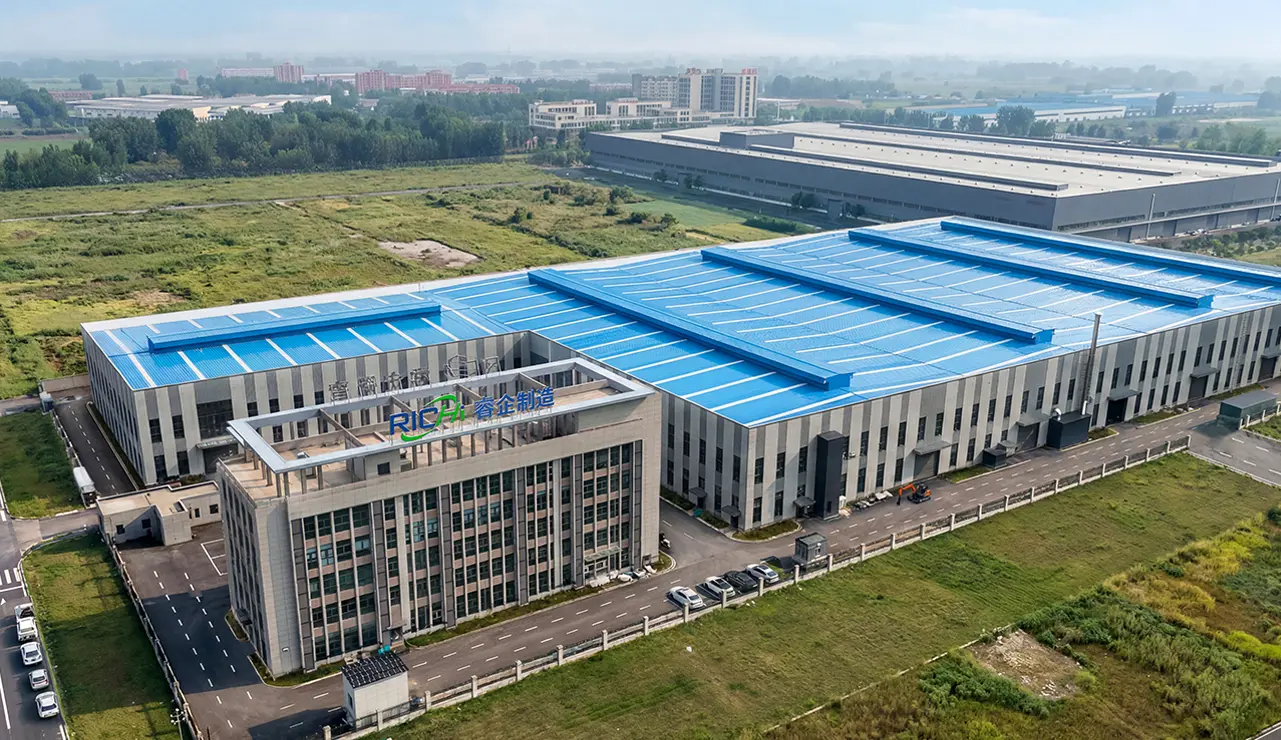
RICHI Machinery Co., Ltd., established in 1995, is a professional manufacturer integrating R&D, manufacturing, design and installation of complete sets of feed machinery engineering, complete sets of biomass pellet engineering, steel silo engineering and automation control.
Certifications & Honors
RICHI has obtained numerous international authoritative certifications, including CE, ISO9001, SGS, German TÜV, Russian RTN, and French BV, and holds 23 patents. The company has been recognized as a Henan Provincial High-Tech Enterprise, a Zhengzhou Municipal “Specialized, Refined, and Innovative” SME, and a member of the Henan Provincial International Trade E-commerce Association.
60,000㎡+
production base
23+
Patents obtained
30+
Years Of Experience
2000+
successful projects
Product System & Global Service
RICHI has developed a diverse and comprehensive product system, covering 15 major series and over 200 products, including feed pellet mills, wood pellet mills, organic fertilizer pellet mills, aquaculture extrusion extruders, and cat litter pellet mills. This system can comprehensively meet the needs of various feed production and biomass pellet processing.
Leveraging a comprehensive international marketing network, its products are sold in 131 countries and regions worldwide, with over 2000 projects implemented and annual exports exceeding 100 million RMB, serving customers globally.