peanut shell pellet mill

Peanut Shell Pellet Mill for Sale
If you are comparing suppliers, don’t start with the price per mill. Start with the pellet you need to sell or use. A fuel pellet for a chain-grate boiler is not the same as bedding for horses or feed for cattle. Ash behavior, moisture, and feeder design all matter.
Peanut Shell Pellet Prodcution

Capacity
0.3-10T/H

Particle Size
2–12 mm
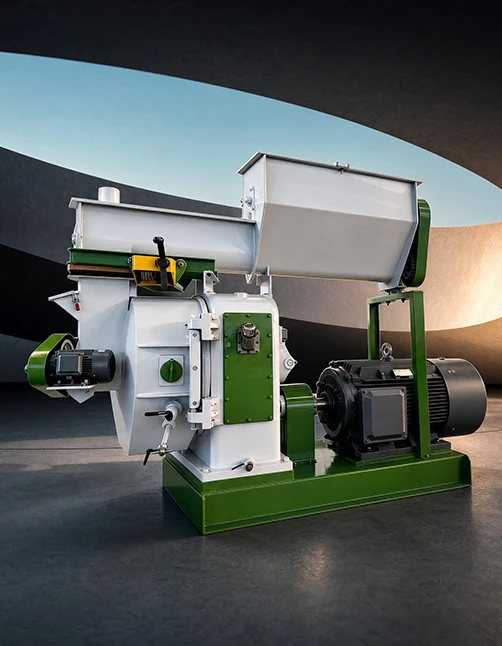
Peanut shells are fluffy, abrasive, and often dirty. So they often bridge in the bin. They wear a die faster than softwood. They behave differently when moisture changes. RICHI MZLH ring die mills are built for this material. Depending on the line, capacity runs from 0.3 to 10 t/h, pellet size from 2 to 12 mm, and the equipment can run continuously when maintenance is kept up. We have been manufacturing pellet mills for more than 30 years.
So before we quote, we usually ask for three things:
· What raw material will you actually run? Peanut shells only, or shells mixed with sawdust, straw, rice husk, or something else?
· What is the moisture? Fresh shells from a sheller can be very different from shells stored outside.
· What will the pellet be used for? Fuel, bedding, fertilizer, or feed?
Send us the sample, tell us the target, and we will test. Then we recommend the die compression, feeder, and line layout. We can provide factory testing, spare parts, installation support, and complete line design. That is more useful than a generic quote.

Four Designs, Four Different Jobs
We don’t use one mill design for every peanut shell project. Die compression, feeding system, and conditioning change with the end product. Most inquiries fall into four groups.
Peanut Shell
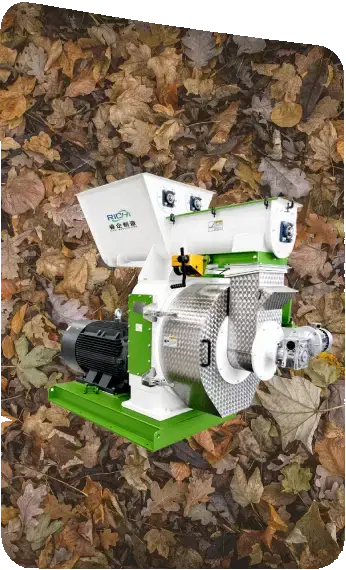
Fuel Pellet Mill
This is the most common use. Peanut shells are pressed into high-density fuel pellets for boilers, furnaces, power plants, and home heating.
•
Capacity : 0.2–4 t/h
•
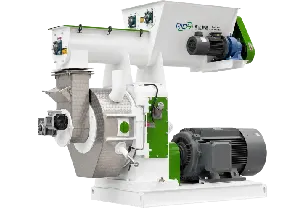
The MZLH ring die mill uses a high-precision gear drive, a wear-resistant die, and a stable feeding system. It can also handle straw and wood chips. Energy use is lower than many older belt-driven designs, and maintenance is straightforward.
But if your shells are wet or sandy, don’t expect the mill alone to solve everything. A dryer and screener usually pay for themselves in pellet quality and die life.
Peanut Shell & Agro-Waste Biomass Pellet Mill
This design is for shells, straw, wood chips, and other agro-waste. The output can be biomass pellets or animal bedding.
•
Capacity : 1–40 t/h
•
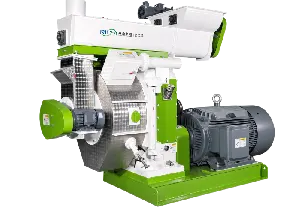
A forced feeder and anti-bridging hopper help keep fibrous material moving. The die is made from alloy steel, and the roller assembly is built for mixed materials. Low noise matters in some installations, especially when the line runs near a village or farm.
Mixed materials need a custom die compression. What works for pure peanut shells may not work when you add 30% sawdust or rice husk. For bedding, dust control and absorbency matter as much as density.
Peanut Shell
Organic Fertilizer Pellet Mill
This version pellets fermented manure, peanut shells, and straw into organic fertilizer pellets.
•
Capacity : 1–26 t/h
•
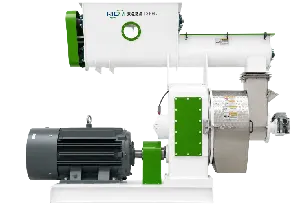
It uses a lower compression ratio and an anti-clogging design. Parts are corrosion-resistant because fertilizer lines are often wet and sticky. Capacity can run from 1 to 26 t/h. Steam conditioning is usually not needed. The goal is stable shaping, not high-density fuel.
If your material is high-moisture and sticky, this is a different machine from a fuel mill. Don’t try to force a fuel die to do a fertilizer job.
Peanut Shell
Animal Feed Pellet Mill
This is for peanut shell feed pellets blended with nutrients for poultry, cattle, sheep, fish, and other livestock.
•
Capacity : 1–40 t/h

•
Using the SZLH ring die design, a stainless steel conditioner, and steam conditioning. Compression is adjustable. Capacity can reach 1 to 40 t/h for commercial feed plants. Custom formulas are supported.
Feed pellets have different rules. Protein, fat, starch, and moisture all affect how the pellet forms. A feed line also needs different cleaning and conditioning than a fuel line.
Superior Performance
of the Peanut Shell Pellet Mill
Key parts decide uptime, pellet quality, and maintenance cost. Please take a look at the key technical highlights of our peanut shell pellet mill below.
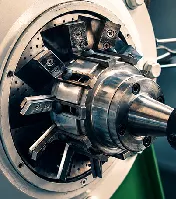
Feeding: steady, no bridging
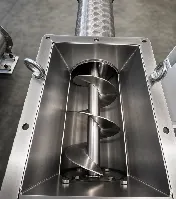
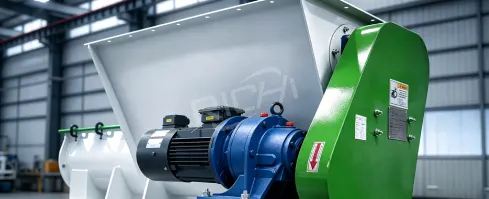
Peanut shells are light and fibrous. They love to bridge. A break-arch feeder keeps material moving into the die. If feeding is uneven, the die chamber starves, output drops, and pellet quality becomes inconsistent. A bigger mill will not fix a feeding problem.

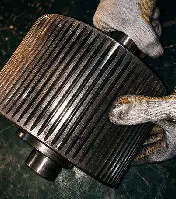
Durable Ring Die
The ring die uses 42CrMo alloy and a compression ratio tuned for peanut shells. That matters because shells are abrasive. A die that is too hard or too soft will either crack or wear out too fast.
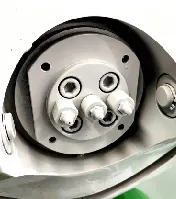
Alloy Steel Shafts
The main shaft and hollow shaft are forged from imported alloy steel and heat-treated. This keeps the structure rigid under load. A bent shaft is not a small repair.
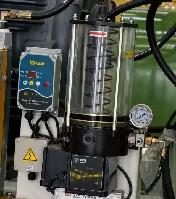
Automatic Lubrication
Roller bearings get independent, automatic oiling from a circulating pump. This avoids skipped greasing and surprise downtime. Bearing life goes up when lubrication is consistent, not when someone remembers to do it.
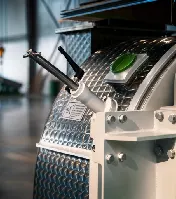
Overload Protection
Safety pins and overload sensors cut power when the die jams. This protects the mill and the crew, especially during unattended shifts. Every pellet mill will jam at some point. The question is whether it jams safely.
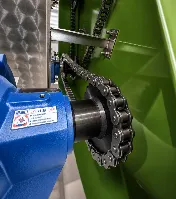
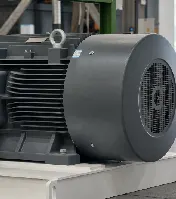
98%+ Gear Transmission Efficiency
A precision gear drive pushes transmission efficiency above 98%. In practice, that means roughly 15% more output than a belt-driven mill, with less noise and less output drift. The gear drive costs more up front. If you run two or three shifts, it usually pays back.


Various Capacities
Below is the MZLH ring die range for peanut shell fuel pellets. Treat it as a starting point, not a promise. Capacity changes with moisture, die compression, pellet size, and raw material mix. A single MZLH fuel mill often runs around 0.3–4 t/h. Complete fuel lines can reach 0.3–10 t/h.
| Model | MZLH320 | MZLH350 | MZLH420 | MZLH520 | MZLH678 | MZLH768 |
| Main Motor Power(kw) | 22 | 37 | 90 | 132 | 200 | 250 |
| Arch-breaking Feeder Power(kw) | 2.2 | 2.2 | 3 | 3 | 3 | 4 |
| Forced Feeder Power(kw) | 0.75 | 0.75 | 1.5 | 1.5 | 1.5 | 1.5 |
| Ring Die Inner Diameter(mm) | 320 | 350 | 420 | 520 | 673 | 762 |
| Finished Particle Diameter(mm) | 4~12 | |||||
| Output(T/H) | 0.2-0.3 | 0.3-0.5 | 1.0-1.2 | 1.5-2.0 | 2.5-3.0 | 3.0-4.0 |
Given the capacity of a single peanut shell pellet mill, you can achieve your target production output by installing multiple pelletizing units in parallel when setting up the actual production line.
Our video showcase
Curious how rice husk turns into fuel? Watch three short videos: husk pellet machine parts & maintenance, pellet production, and and on-site processing of various biomass shell pellets.
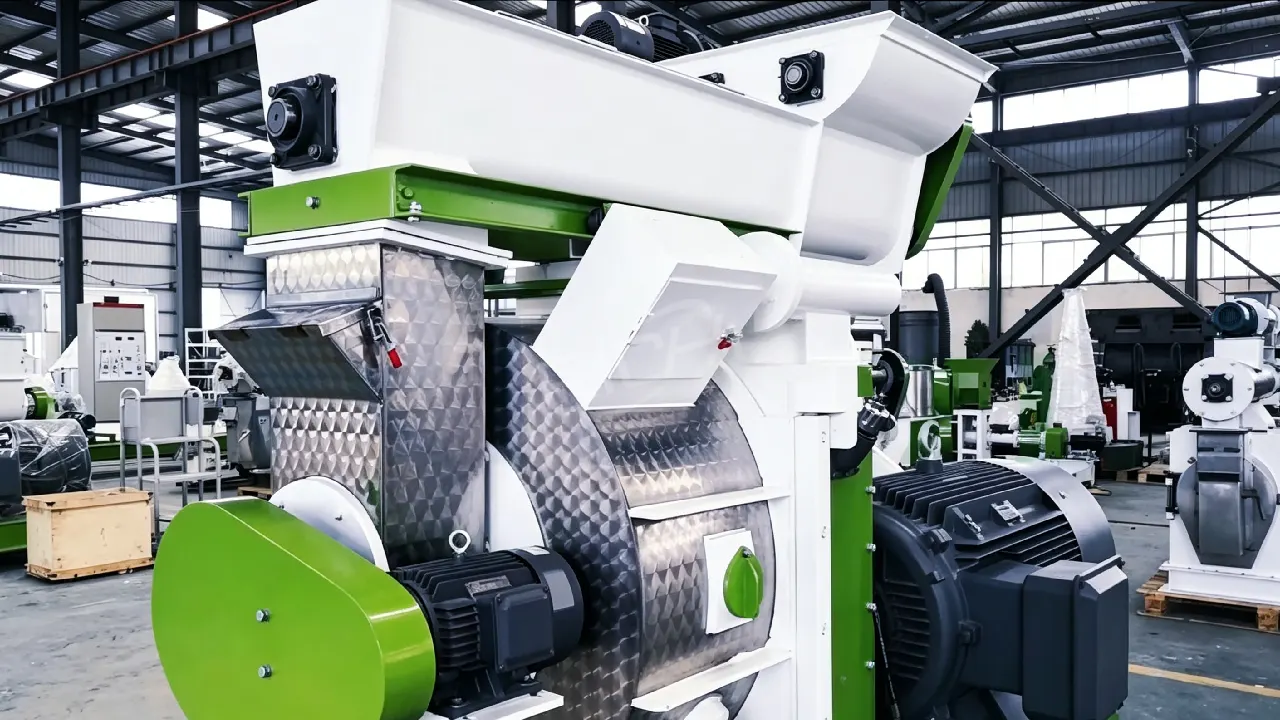

Rice Husk Pellet Mill Parts & Maintenance
Take a look at this peanut shell pellet machine! In this video, we showcase its overall structure—highlighting key components such as hydraulic hoses, the main motor, pressure rollers, and the die chamber—to give you a clear overview. We also demonstrate how to disassemble the die and rollers, providing a practical look at routine maintenance procedures.
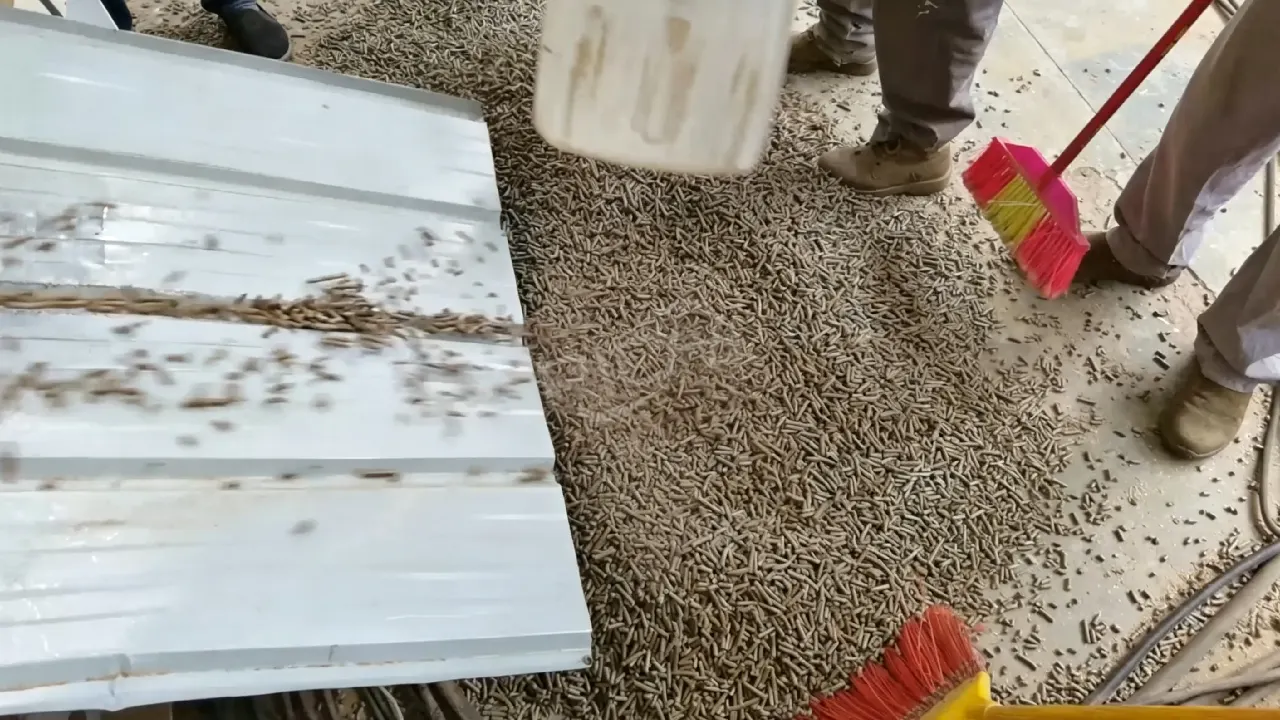
How to Produce Peanut Shell Pellets
This is a live test run demonstration. Raw material (peanut shells) is fed into the machine and extruded through a ring die into dense fuel pellets. The equipment operates smoothly with a stable output, making it ideal for home heating, boiler fuel, and biomass energy applications.
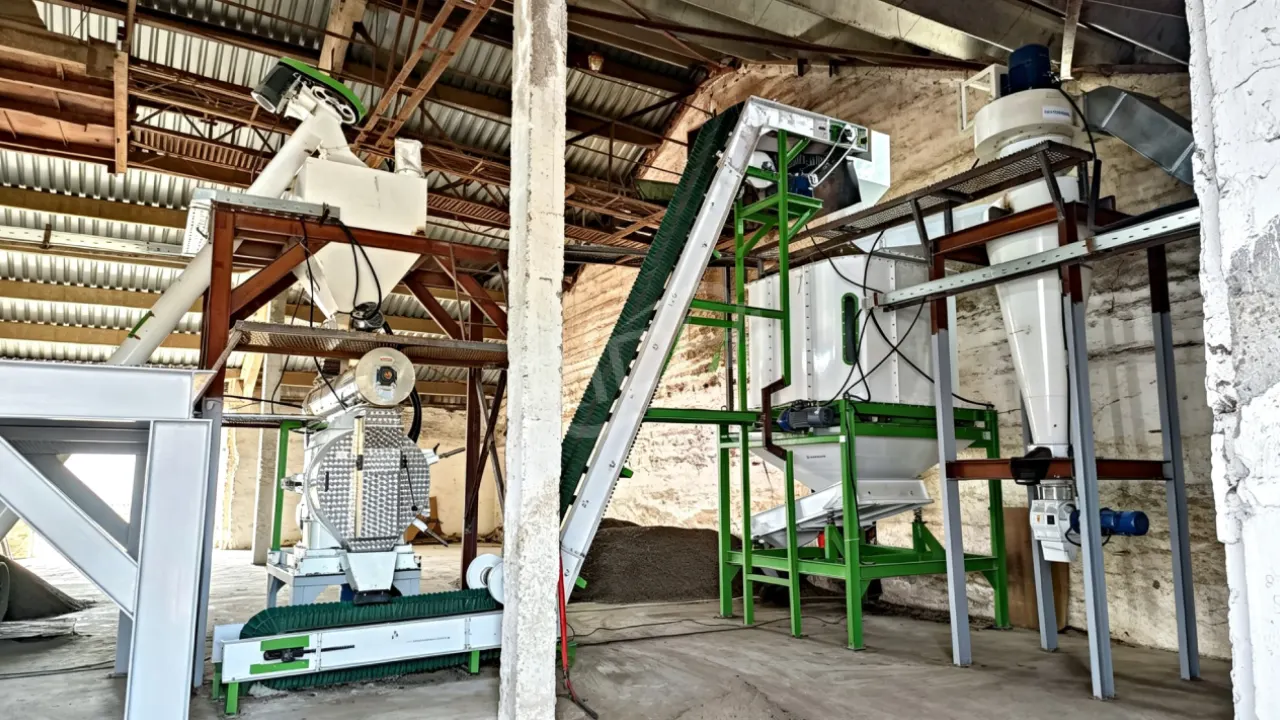
On-site view of a biomass shell-based fuel pellet production line
Welcome to our biomass shell processing site. This delivered pellet production line is capable of processing raw materials such as peanut shells, sunflower seed hulls, and straw. Equipped with a PLC automatic control cabinet, the line ensures stable operation and produces high-quality solid fuel pellets. If you are interested in biomass shell processing, please contact us for more on-site footage.
Global Delivered Cases
RICHI has delivered peanut shell pellet projects worldwide—from Africa to North America. Please take a look below at the operation of these peanut shell pellet mills in their respective projects.
PREVIOUS
NEXT
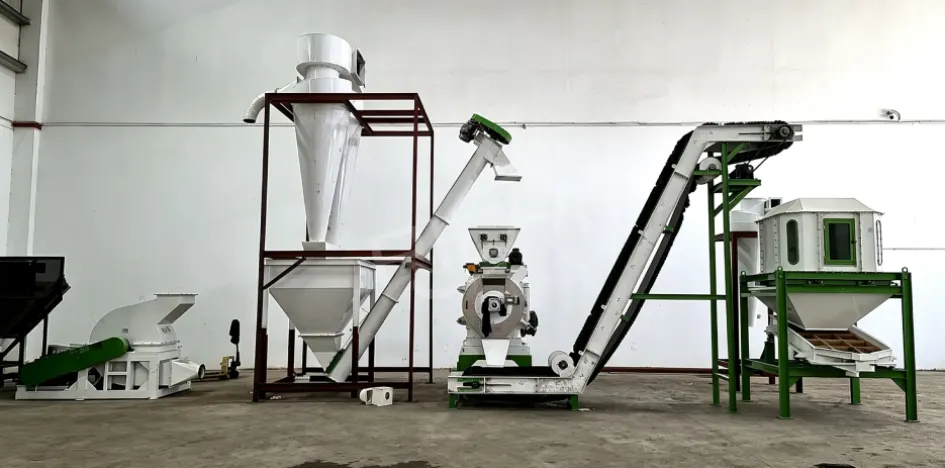

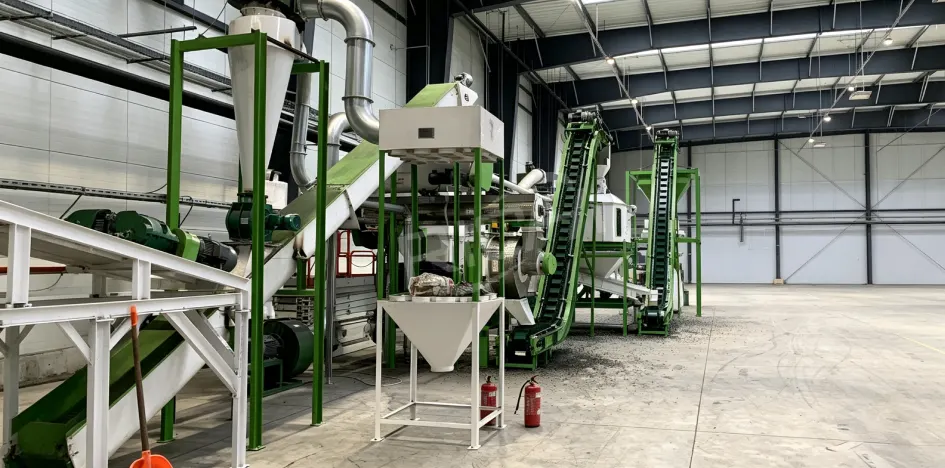
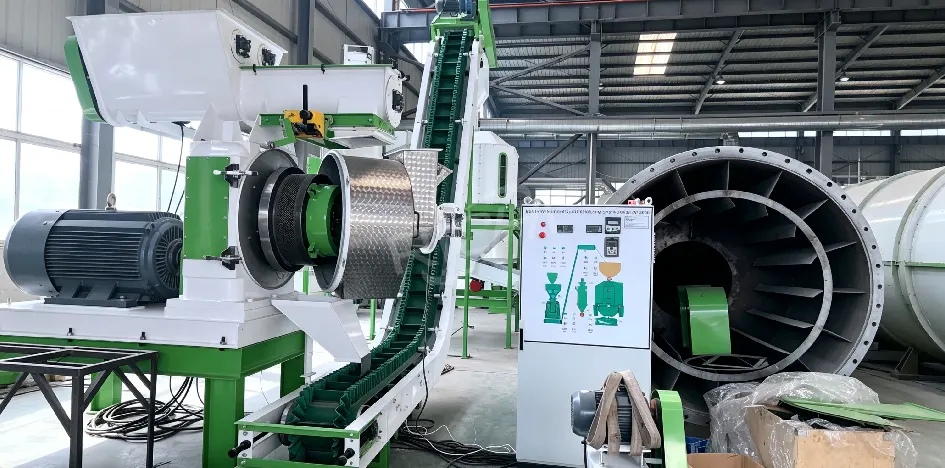
Why Process Peanut Shells into Pellet Fuel?
Untreated peanut shells are often discarded, burned in fields, or left to rot—practices that not only waste energy but also cause pollution. Processing them into pellet fuel effectively addresses these issues: it increases density, reduces moisture content, ensures uniform fuel specifications, and improves combustion efficiency. At the same time, it reduces methane emissions from decomposition and smoke generated by open-field burning.
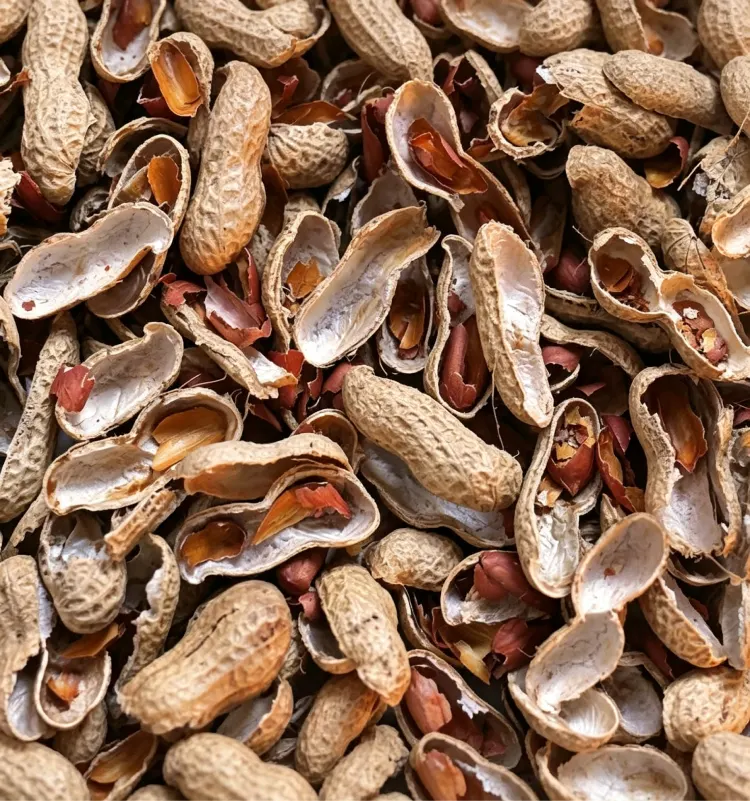
01
Calorific Value
Peanut shell pellets have a calorific value of approximately 3,700–4,000 kcal/kg, making them highly suitable for use in boilers, furnaces, and power generation.
02
Cleaner Combustion
Their low sulfur and low ash content result in lower emissions of sulfur dioxide (SO₂), nitrogen oxides (NOx), and particulate matter compared to many traditional fuels.
03
Easy transport & storage
Pellet fuel is dense and uniform in size; it can be stored stably for 12–18 months under dry conditions—advantages that loose peanut shells lack.
04
Renewable
Peanut shell pellets are a carbon-neutral biomass fuel; they support sustainable development goals without requiring additional land use.
05
Versatile Applications
They can be used for residential heating, industrial boilers, and power plants, as well as for animal bedding, animal feed, and organic fertilizer.
06
Waste-to-value
Raw material cost is often low, sometimes free. For peanut processors and farms, that creates a new profit stream from a waste product.
Peanut Shell Pellet Production Process
A stable peanut shell pellet line is more than one peanut shell pellet mill. In daily production, the key is matching each step to your raw material, moisture, and target pellet.
PREVIOUS
NEXT
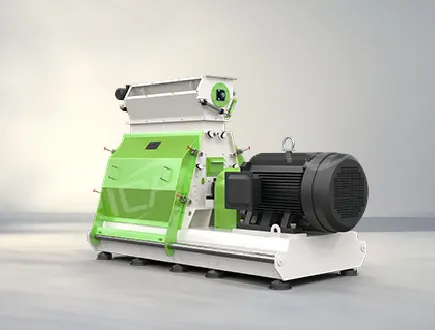
Crushing
Use a hammer mill or crusher to reduce peanut shells to below 5 mm. Remove stones, iron, and foreign matter first. Uniform particle size helps the ring die press evenly and prevents feed blockage. A magnetic separator protects the pellet mill. This is not optional if your shells come from an outdoor pile.
Drying
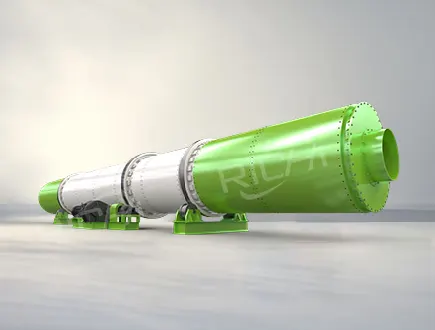
Dry crushed shells to about 10–15% moisture. Too wet, pellets crack and clog. Too dry, they may not bind well. Use a rotary dryer or belt dryer, then test moisture before pelletizing. In our experience, 12–15% works best for many peanut shell lines. Consistent moisture matters more than the exact number.
Pelletizing
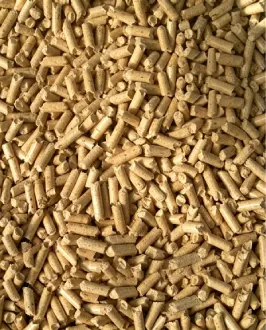
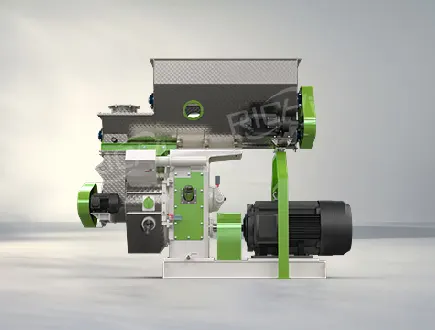
Feed material into the ring die peanut shell pellet mill. Rollers press shells through the die under high pressure and heat. Natural lignin softens and binds the powder—no additive is needed. Pellet size is 2–12 mm. Cutters control length. Stable feeding matters. Check die gap daily.
Cooling
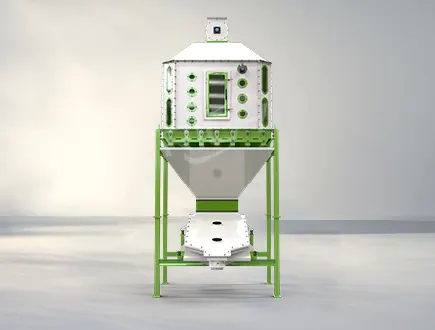
Hot pellets leave the die at 70–90°C. A counterflow cooler lowers them to near room temperature, hardens the surface, and removes extra moisture. This step prevents soft, sticky pellets and packaging problems. Do not pack hot pellets. They will sweat and mold.
Screening
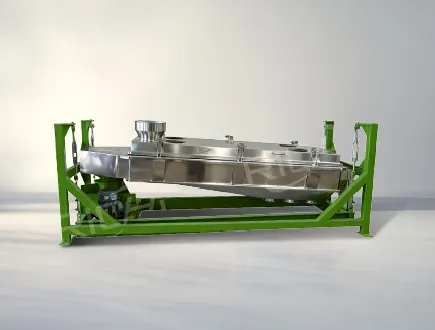
A vibrating screen separates finished pellets from dust and broken pieces. Oversize and fines can return to the pellet mill or be used separately. Screening keeps the final fuel clean, uniform, and easier to sell. It also protects boiler feeding systems. Check screen mesh regularly.
Packaging
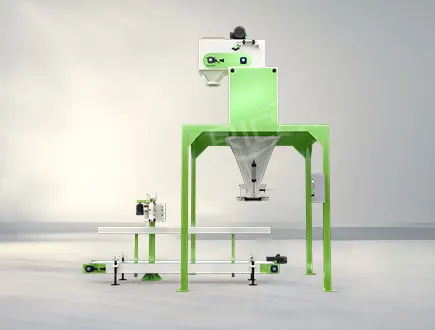
Pack cooled pellets in 10–50 kg bags, jumbo bags, or bulk. Choose manual or automatic weighing according to capacity. Store in a dry, ventilated place. Moisture is the enemy of biomass pellets. Label and seal bags well for transport. For fuel plants, ton bags are common.
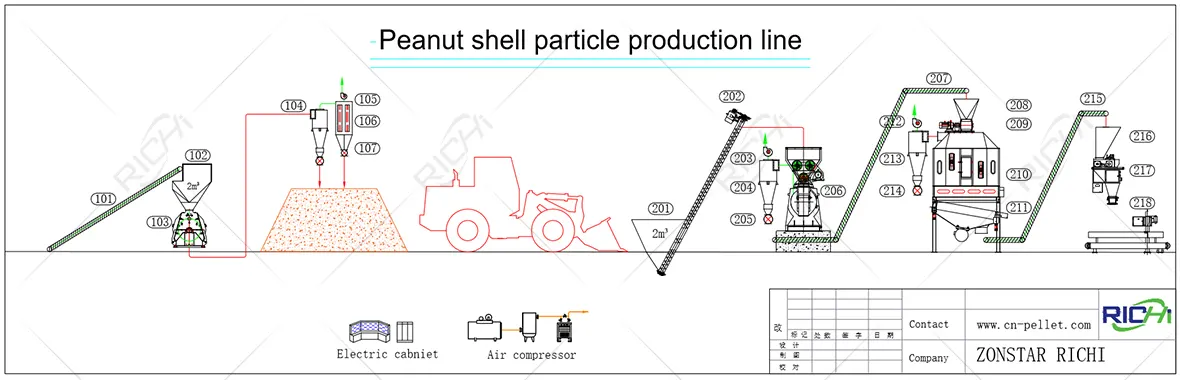
process flow diagram:
peanut shell Pellet Production Line
Capacity can be increased by changing the peanut shell pellet mill model or running multiple mills in parallel. Multiple line configurations are available—low-spec, basic, standard, high-spec, fully automatic, semi-automatic, and PLC-controlled—to match different budgets and needs.
· Raw Material Preprocessing Section
Belt Conveyor: Feeds peanut shells into the storage bin.
Storage Bin (2 m³): Buffers incoming peanut shells.
Hammer Mill: Crushes large peanut shell pieces into fine powder.
Cyclone Collector: Air conveys crushed material to the cyclone, separating powder from airflow and collecting the ground peanut shell powder.
Bag Filter: Captures dust and purifies exhaust air.
Rotary Airlock Discharge Valve: Locks air and discharges powder onto a temporary pile.
· Pelletizing Section
Feeding Bin(2 m³): Stores pretreated peanut shell powder.
Feeding Elevator: Lifts and conveys powder.
Buffer Bin: Holds material for stable feeding.
Cyclone Dust Collector: Removes dust.
Rotary Airlock: Ensures steady discharge.
Peanut Shell Pellet Machine: The core of the whole line. Peanut shell powder is extruded and pressed into cylindrical biomass pellets.
· Cooling + Screening Section
Bucket Elevator: Feeds hot pellets into the cooling equipment.
Counterflow Cooler: Hot pellets exchange heat with cold air in counterflow, rapidly cooling down, reducing moisture, increasing hardness, and preventing breakage.
Vibrating Screen: Grades finished pellets, removing broken pieces and fines (undersize material can return for re-pelletizing).
Cyclone Dust Collector + Rotary Airlock: Collects dust generated during cooling and screening.
· Finished Product Packing Section
Finished Product Elevator: Conveys screened, intact pellets to the packing bin.
Packing Bin: Buffers finished pellets.
Automatic Weighing & Bagging Scale: Measures and discharges pellets by preset weight.
Bag Conveyor & Sewing Machine: Conveys and seals bags, producing bagged peanut shell pellets.
Auxiliary Systems
An electrical control cabinet controls the entire line: start/stop, interlocking, and parameter adjustment. An air compressor supplies compressed air for dust collector valves and pneumatic components on packing equipment.
FAQ About Peanut Shell Pellet Production
Before you buy a peanut shell pellet mill, it helps to know what the machine can and cannot do. Raw material moisture, pellet size, die compression, and local market demand all shape the right configuration. These are the questions our engineers hear most often from fuel plants, farms, and feed producers. We recommend that you read this information before making an inquiry.
What raw materials can a peanut shell pellet mill process?
→
Peanut shells are the main material, but the same ring die mill can also handle straw, rice husk, wood chips, sawdust, dry grass, and other agro-forestry waste. For feed or fertilizer, you may blend shells with other ingredients. Moisture and particle size must be controlled before pelletizing. In our experience, mixed materials need a tailored die compression.
Do I need to add binder?
→
No binder is usually needed. Peanut shells contain natural lignin. Under pressure and heat in the ring die, lignin softens and binds the powder. The key is proper moisture, usually 10–15%, and fine, uniform crushing. If material is very dry or fibrous, small water adjustment may help—but avoid overdosing.
What pellet size and capacity can I get?
→
Pellet diameter can be 2–12 mm. Single MZLH fuel pellet mills run about 0.3–4 t/h; feed SZLH models can reach 1–40 t/h, and organic fertilizer models 1–26 t/h. Complete lines can be designed from small farm use to 90 t/h fuel production. Capacity depends on moisture, die, and material.
What does a peanut shell pellet mill cost?
→
It depends on model, capacity, and what is included. A single MZLH ring die mill typically runs from around $10,000 to $72,000, depending on motor power and die size. Full production lines cost more — a 12 t/h peanut shell pellet plant in South Africa was quoted at $470,000, including crushing, conveying, and auxiliary equipment. The key is not the sticker price. It is what you actually get for your specific raw material and target pellet size.
Can the production line be customized to my budget and capacity?
→
Yes. Every peanut shell pellet line we design is built around three things: your raw material, your target output, and your budget. We offer several levels — simple configuration (basic crushing + pelletizing), standard (with drying, cooling, and screening), and fully automatic (PLC-controlled batching, auto packing, dust collection). Multiple projects we have delivered demonstrate that proper configuration yields greater cost savings than purchasing discounted equipment. For example, if your shells arrive clean and dry, you can skip the dryer and crusher entirely.
What is the typical ROI for a peanut shell pellet plant?
→
It varies by market and scale, but the numbers are encouraging. Small-to-medium operations often recover their investment within 6–18 months, depending on local pellet prices and raw material cost. The biggest cost advantage: peanut shells are often free or very cheap in peanut-growing regions. Local groundnut shell pellets typically sell for $90–150 per tonne ex-plant, with a 30–40% discount versus imported wood pellets — but production cost is far lower. In our experience, the payback is fastest when you sell locally and avoid long-distance feedstock transport.
How do peanut shell pellets compare with wood pellets in price and heat value?
→
Peanut shell pellets usually deliver 3,500–4,000 kcal/kg, close to many wood pellet grades (3,800–4,200 kcal/kg for oak/pine). But the price gap is significant: peanut shell pellets can be 20–40% cheaper than wood pellets because the raw material is a low-cost agricultural by-product. For industrial boilers and power plants, this cost advantage often outweighs the slight heat value difference. One thing to watch: ash content. Peanut shell pellets typically contain 3–8% ash, slightly higher than premium wood pellets. If your boiler can handle that, the savings are real.
Can I start small and expand the line later?
→
Absolutely. This is one of the most practical ways to enter the business. Many of our customers start with a single pellet mill and manual feeding, then add crushing, drying, cooling, screening, and automatic packing as demand grows. The modular design means you can upgrade in stages — add a dryer when you start using wetter shells, add a cooler when your output reaches 1 t/h or more, add PLC batching when labor cost becomes an issue. The key is to size your foundation and layout with future expansion in mind.
Still unsure? Send us your raw material, target capacity, and final pellet use. Our team will recommend a model and line layout—not just a price list. We reply with practical, production-based advice. Feel free to contact RICHI.
More Biomass Pellet Machines
Our rice husk pellet mill delivers stable biomass pellet production. We also design specialized pellet mills to process diverse raw materials. Explore our alternative models built for EFB, alfalfa, waste paper and sawdust to match your unique feed, bedding or fuel manufacturing demands.

Who are we?
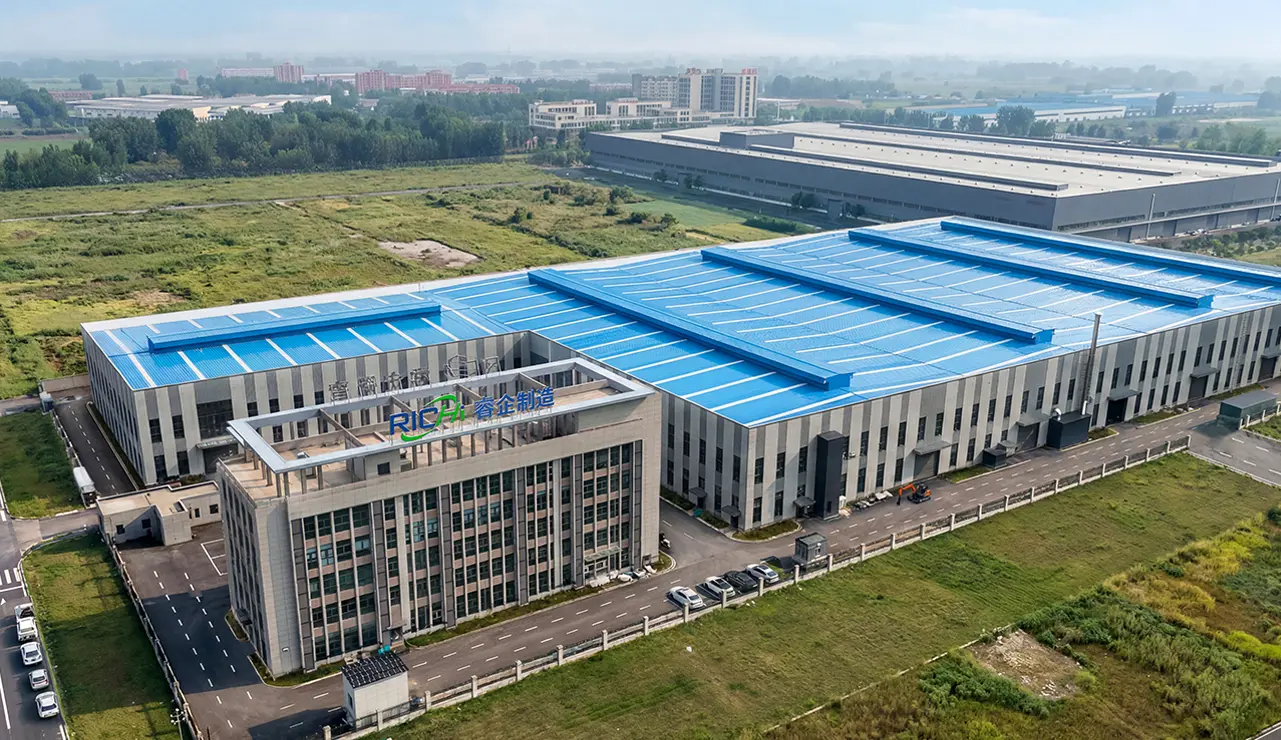
RICHI Manufacturer Co., Ltd., established in 1995, is a professional manufacturer integrating R&D, manufacturing, design and installation of complete sets of feed machinery engineering, complete sets of biomass pellet engineering, steel silo engineering and automation control.
Certifications & Honors
RICHI has obtained numerous international authoritative certifications, including CE, ISO9001, SGS, German TÜV, Russian RTN, and French BV, and holds 23 patents. The company has been recognized as a Henan Provincial High-Tech Enterprise, a Zhengzhou Municipal “Specialized, Refined, and Innovative” SME, and a member of the Henan Provincial International Trade E-commerce Association.
60,000㎡+
production base
23+
Patents obtained
30+
Years Of Experience
2000+
successful projects
Product System & Global Service
RICHI has developed a diverse and comprehensive product system, covering 15 major series and over 200 products, including feed pellet mills, wood pellet mills, organic fertilizer pellet mills, aquaculture extrusion extruders, and cat litter pellet mills. This system can comprehensively meet the needs of various feed production and biomass pellet processing.
Leveraging a comprehensive international marketing network, its products are sold in 131 countries and regions worldwide, with over 2000 projects implemented and annual exports exceeding 100 million RMB, serving customers globally.